
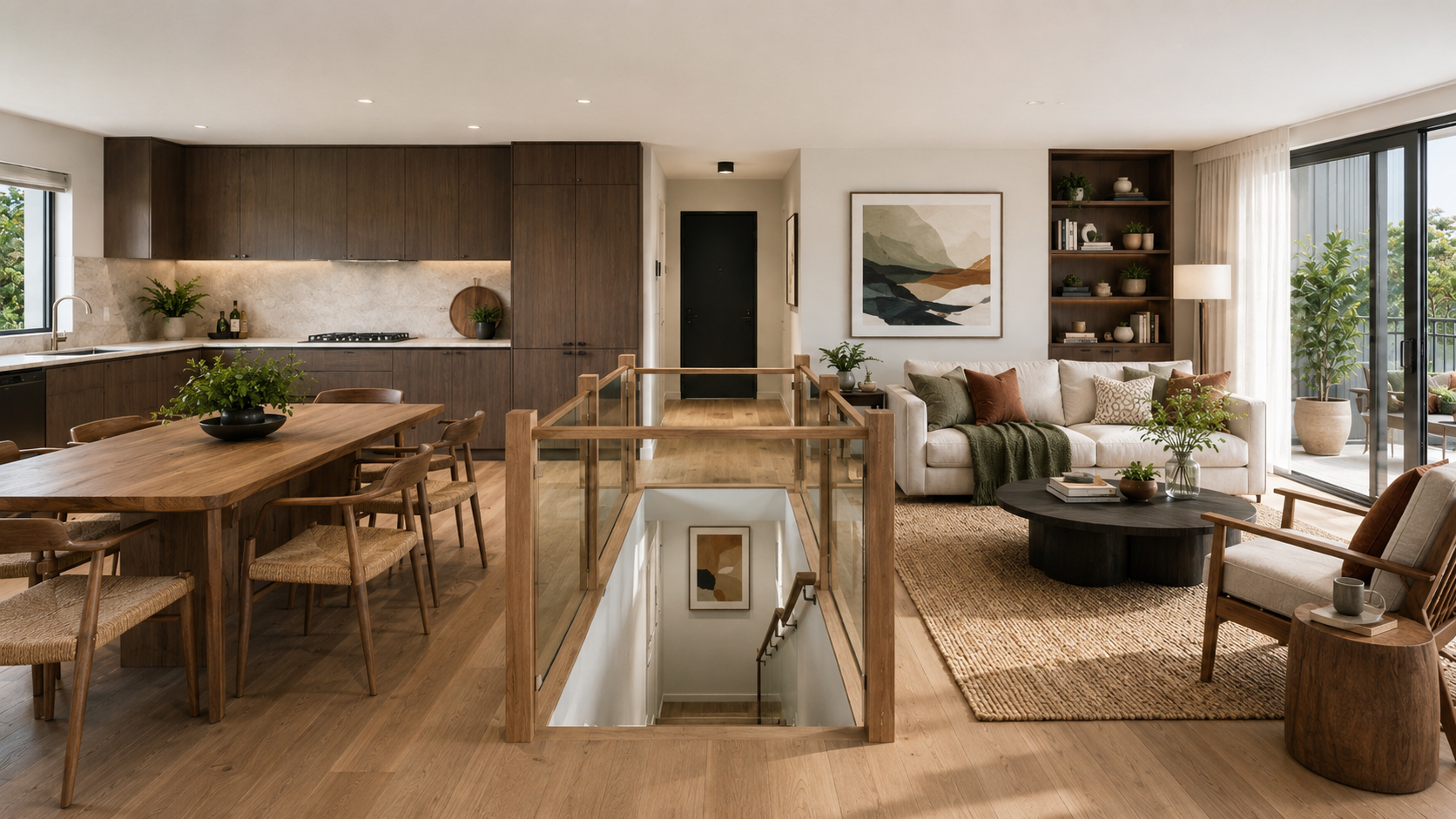
A beautiful home should never come at the expense of being able to live comfortably within it.
That might sound obvious, but it is surprisingly easy to design a room around how we want it to look rather than how we genuinely need it to work. We choose the beautiful sofa before considering whether everyone can sit comfortably. We plan an immaculate kitchen without thinking about where the post, school bags and everyday appliances will go. We create open-plan spaces that look wonderful in photographs but do not always provide the privacy, storage or quiet that family life requires.
The most successful homes bring these two sides together. They feel calm, considered and visually beautiful, but they also make ordinary life a little easier.
To me, practical design does not mean filling a home with purely functional furniture or choosing finishes simply because they are easy to clean. It means creating a home that understands the people living in it: their routines, habits, possessions, relationships and the way their needs may change over time.
Begin with how you actually live
Before thinking about colours, furniture or finishes, think about what happens in your home on an ordinary day.
Where do coats and shoes naturally get dropped? Where do the children do their homework? Do you regularly work at the kitchen table? Does everyone gather in the kitchen while food is being prepared? Do you need somewhere quiet to retreat to at the end of the day?
These small observations often reveal far more than a carefully curated inspiration board.
A home that works well creates a good fit between the environment and the people using it. Research into residential wellbeing increasingly supports this idea. Studies examining flexible homes have found that people’s ability to use and adapt their surroundings to meet changing needs is positively associated with wellbeing. It is not simply the size or appearance of the home that matters, but the level of choice and control it gives its occupants.
This is why I always believe design should begin with questions rather than immediate solutions. What feels frustrating at the moment? What creates unnecessary work? Which parts of the home are rarely used, and which are constantly overcrowded?
The answers provide the foundation for a home that is designed around your life rather than an idealised version of it.
Let the layout do the hard work
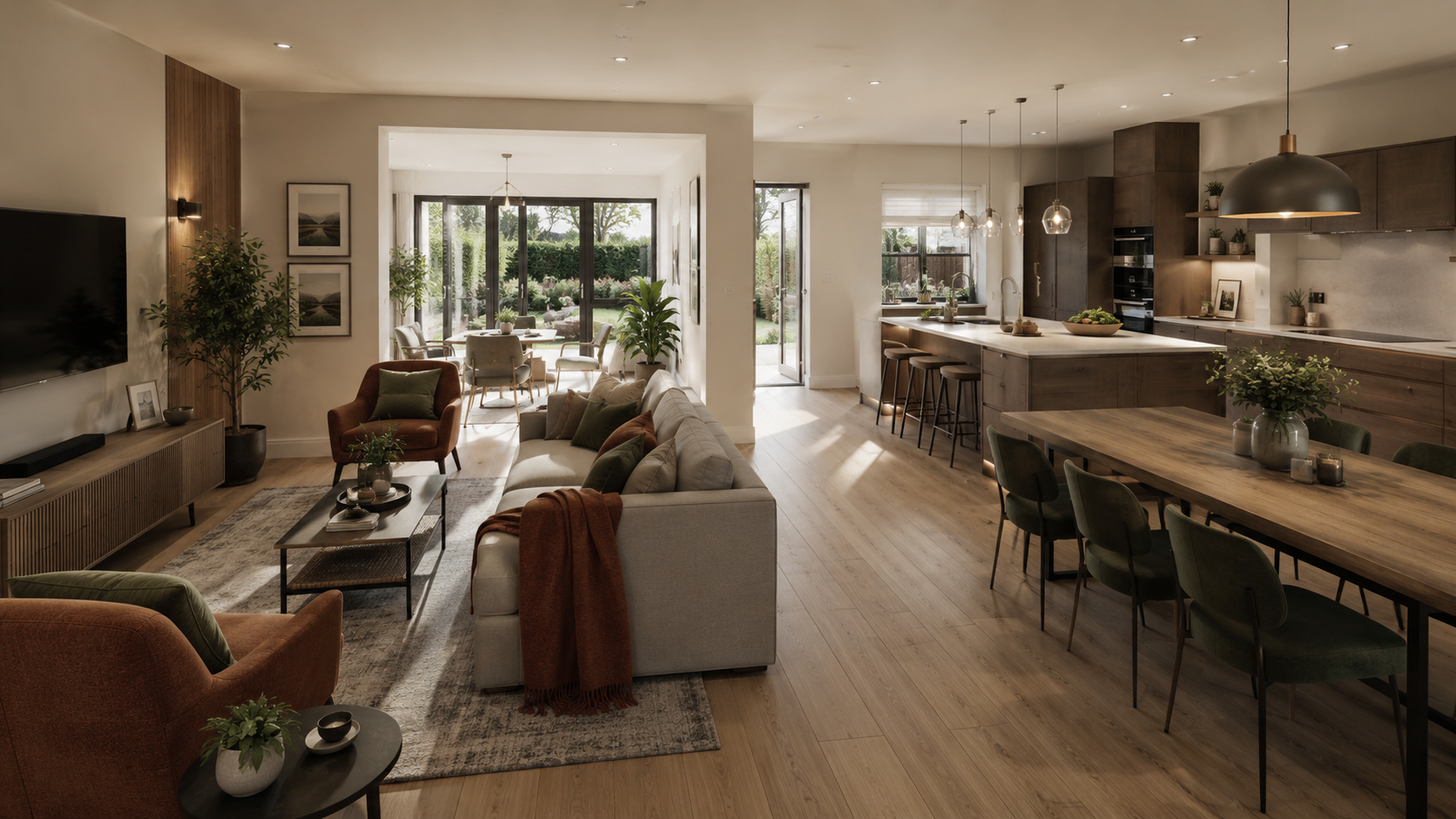
A room can contain beautiful furniture and expensive finishes and still feel uncomfortable if the layout is wrong.
Good space planning should allow you to move through a room naturally. Doors should be able to open properly. Furniture should not interrupt important routes. There should be enough room to pull out a dining chair, walk around the bed or prepare food without constantly moving around somebody else.
Consider the paths that people take through the home. A route from the back door to the kitchen, for example, may need to accommodate muddy shoes, shopping bags, a dog lead and children arriving home from school. A visually impressive entrance hall will quickly become frustrating if it provides nowhere for any of those things to go.
This does not mean every room needs to feel empty. It means that furniture should earn its place.
Before buying something, consider:
What purpose does it serve?
Is it the right scale for the room?
Can people move comfortably around it?
Does it support the way the room is genuinely used?
Will it still work if your circumstances change?
Sometimes the most practical decision is to remove something rather than add more.
Plan storage around behaviour
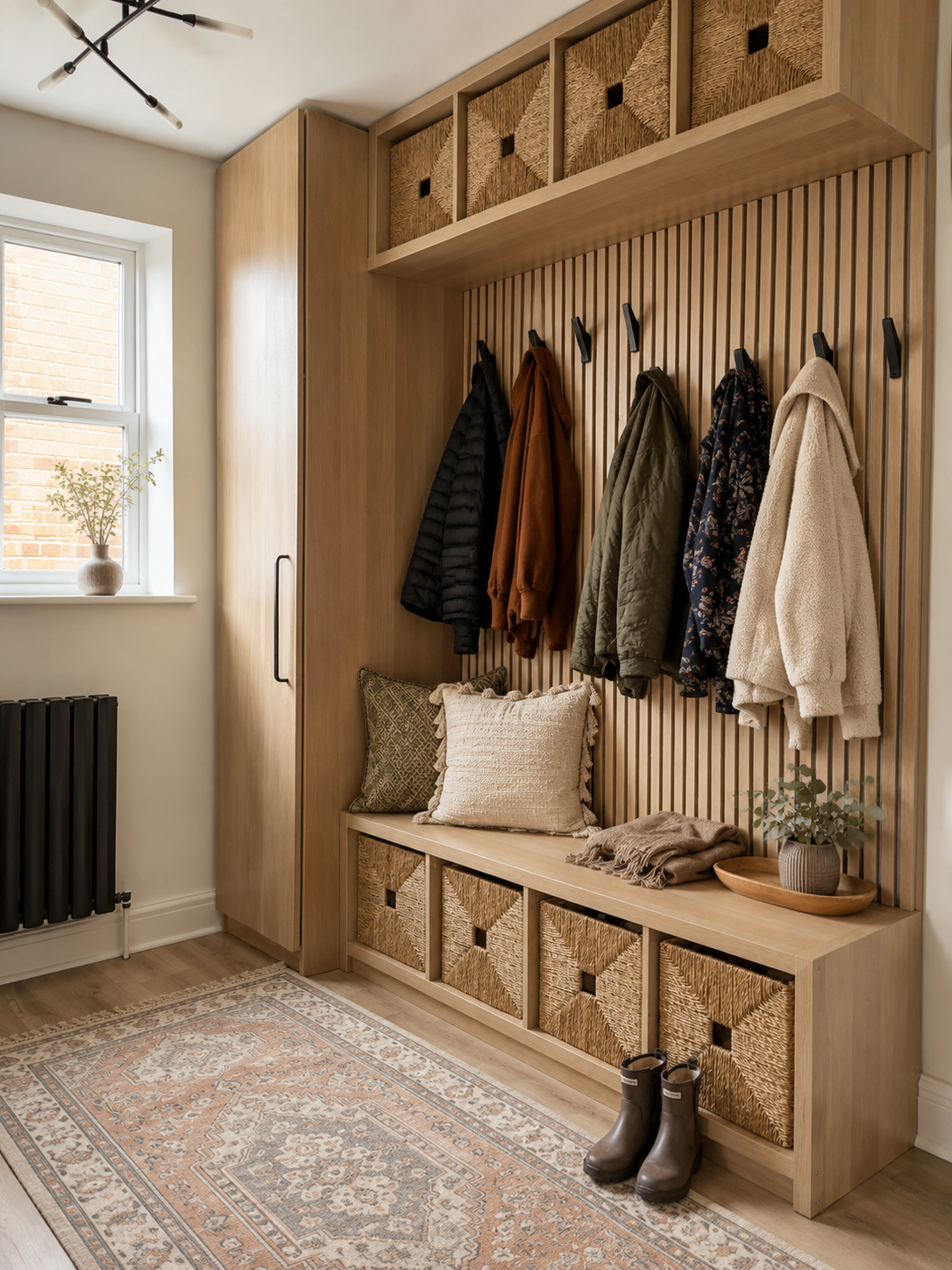
Storage is one of the main reasons a home either continues to feel calm or slowly becomes difficult to manage.
The answer is not always to create as much storage as physically possible. Poorly located storage can be almost as inconvenient as having none at all. The most effective storage is positioned close to where the items inside it are used.
Shoes need a home near the entrance. Towels need to be stored close to the bathroom. Children’s toys need to be accessible enough for children to put them away. Everyday kitchen appliances need to be within easy reach rather than hidden in a cupboard on the opposite side of the room.
It is also worth distinguishing between items that should be concealed and those that deserve to be displayed. Closed storage can contain the practical, visually busy parts of life, while open shelves can be reserved for books, artwork and objects with personal meaning.
This balance matters because visible clutter can affect the way a home feels. A frequently cited study of 60 dual-income couples found that women who described their homes using more language associated with clutter and unfinished projects also showed patterns linked with greater stress and depressed mood. The study was relatively small and does not mean that an untidy room automatically damages our health, but it does suggest that our perception of the home as demanding or unfinished can make it less restorative.
The goal should not be a perfectly empty home. It should be a home in which everyday possessions have logical and manageable places to live.
Use light for function as well as atmosphere
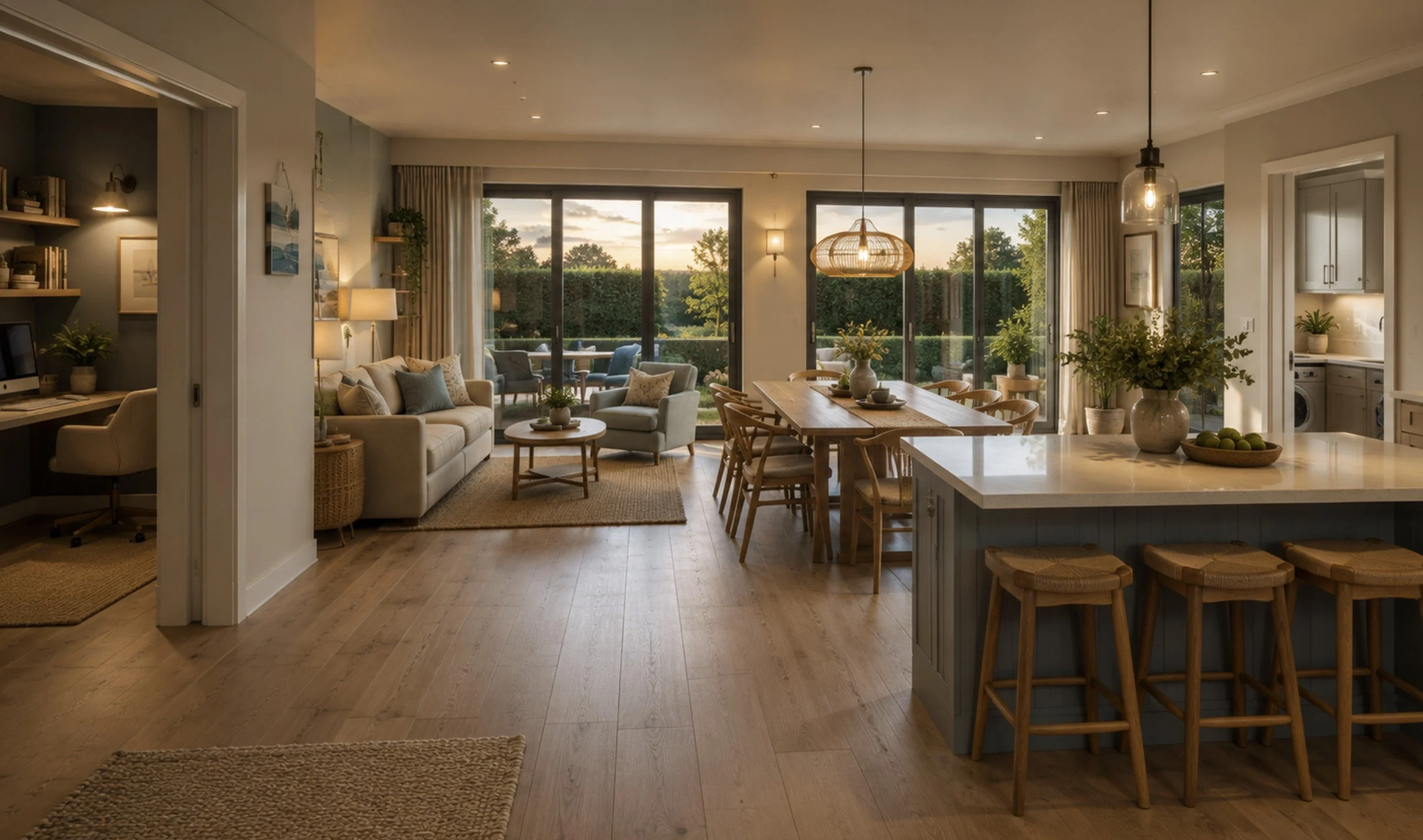
Lighting has an enormous influence on whether a home feels both beautiful and comfortable.
Natural light should be treated as part of the architecture rather than an optional finishing touch. Consider how daylight moves through the home, which rooms receive morning or afternoon sun and whether furniture or heavy window treatments are blocking it unnecessarily.
Research into light and wellbeing has found an overall small-to-moderate positive relationship, although the studies vary considerably in their methods and settings. We also know that the timing of light exposure plays an important role in supporting our circadian rhythms, sleep and mood.
Artificial lighting then needs to respond to the different activities taking place in each room.
A kitchen may need bright task lighting above work surfaces, softer pendants above an island and low-level lighting for the evening. A living room should not rely on one central ceiling light. Floor lamps, table lamps, wall lights and integrated joinery lighting can create a much softer and more adaptable atmosphere.
This layered approach is practical because it provides enough light for reading, cooking or working, but also allows the room to become calmer later in the day.
Where possible, place lights on separate circuits and use dimmers. It is a relatively simple decision during a renovation, but it gives you far greater control over how a room feels.
Choose materials that suit real life
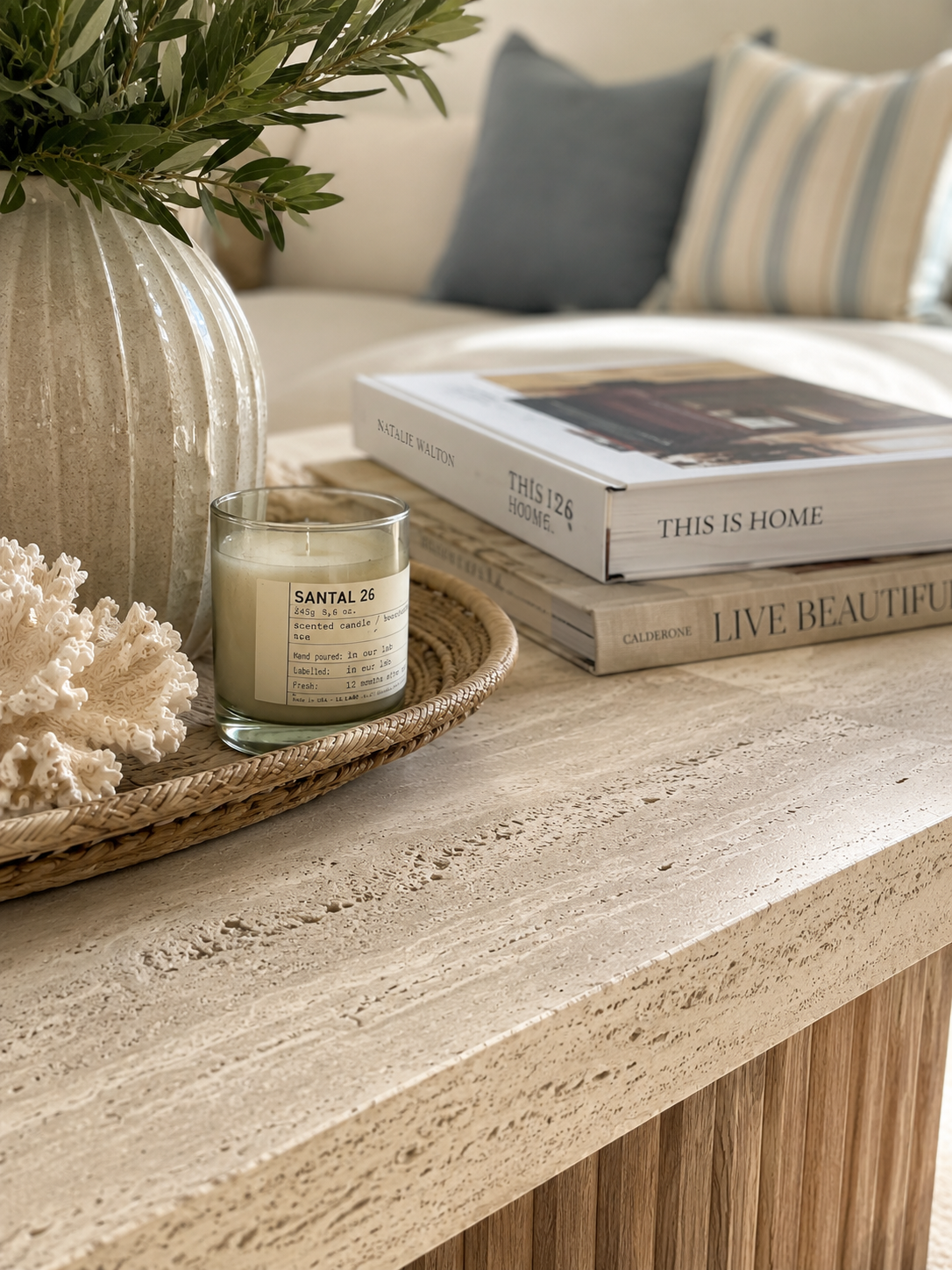
A beautiful material is only a good choice if it remains beautiful when used in the way your household will use it.
That does not mean everything needs to be indestructible. It means being honest about the amount of maintenance you are comfortable with.
A pale fabric sofa may work perfectly in one household and become a source of constant anxiety in another. Natural stone can develop character over time, but some varieties require sealing and may mark or stain. Timber floors can be repaired and refinished, but they will also collect dents and scratches as a family lives on them.
There is no universally correct material. The important question is whether its natural ageing process is something you will appreciate or something that will frustrate you.
I often prefer materials that become richer with use rather than finishes that only look their best when untouched. Timber, linen, wool, aged metal and textured stone can bring depth and warmth to a home without making it feel overly precious.
Practicality can also be quietly incorporated through washable paint finishes, removable cushion covers, durable flooring in busy areas and surfaces that can be repaired rather than completely replaced.
The aim is not to create a home that never changes. It is to choose materials that can live alongside change.
Reduce sensory overload
We tend to think about interiors visually, but we experience our homes through all of our senses.
Noise, glare, temperature, texture and air quality can influence whether a room feels comfortable. A broad review of housing conditions and mental health found that factors including acoustic comfort, thermal conditions, lighting, air quality and the amount of space available can all contribute to how people experience wellbeing at home. The research does not suggest that one decorative choice can transform mental health, but it does show that the home environment is made up of more than its appearance.
Acoustics are particularly easy to overlook. Open-plan spaces filled with glazing and hard surfaces can create echoes and allow noise to travel throughout the home.
Curtains, rugs, upholstered furniture, bookshelves and acoustic wall treatments can all soften sound. Doors between busy and quiet areas can be equally important. Open-plan living may be desirable, but retaining the ability to close off a home office, playroom or television room can make a house much easier to share.
Research into residential environments has associated unwanted traffic, neighbour and household noise with poorer mental health, while more comfortable indoor soundscapes are associated with better experiences at home.
A beautiful home should therefore not only look calm. It should sound and feel calm too.
Bring nature into the design
Our connection with nature does not have to involve covering every available surface with houseplants.
Biophilic design can include natural light, views of the garden, timber, stone, natural textures, organic shapes and colours that reflect the surrounding landscape. It can be as simple as positioning a chair where you can see a tree or designing a kitchen window to frame the garden.
Research into biophilic interiors suggests that these connections may support relaxation and help create environments that feel more restorative, although the evidence varies between populations and types of space.
In practical terms, nature also gives a home a sense of permanence. Natural materials and landscape-inspired colours are less dependent on short-lived trends and can provide a calm background for everyday life.
Rather than adding natural elements as decoration at the end, consider them from the beginning. Think about views, daylight, ventilation and access to outside space as part of the layout itself.
Allow rooms to change
Our homes need to support many more activities than they once did. A dining room may also be a workspace. A spare bedroom may need to become a nursery. A playroom may later become a study or somewhere for an older child to spend time with friends.
This is where flexibility becomes extremely valuable.
Research published in the Journal of Environmental Psychology found that residents’ perceptions of flexibility in their homes were positively associated with both pleasure-based wellbeing and a deeper sense of functioning and fulfilment at home. The ability to make changes and adapt the space played an important role in that relationship.
Flexibility does not necessarily require moving walls or installing complicated systems. It can come from:
Providing enough electrical sockets for different furniture arrangements.
Choosing freestanding pieces that can move between rooms.
Including a mixture of open and enclosed spaces.
Designing built-in furniture for more than one use.
Making sure storage can accommodate changing belongings.
Using lighting that supports several different activities.
A practical home is not frozen at the moment it is completed. It has enough freedom to evolve with the people living there.
Give the home personality
A practical home should not become so controlled that it loses all sense of the people who live there.
Personal possessions, artwork, books, photographs and collected objects are often what transform a well-designed interior into a genuine home. Research into wellbeing at home distinguishes between satisfaction with a property and emotional attachment to it, suggesting that comfort and our relationship with the home are closely connected.
This is one reason I am cautious about following trends too closely. A room designed entirely around what is fashionable at one moment can begin to feel dated very quickly. It may also feel disconnected from the people using it.
Instead, create a simple, cohesive foundation and build personality gradually. Not every object needs to coordinate perfectly. Some of the most interesting homes contain pieces from different periods, places and stages of life.
Beauty often comes from curation rather than perfection.
Beautiful and practical are not opposites
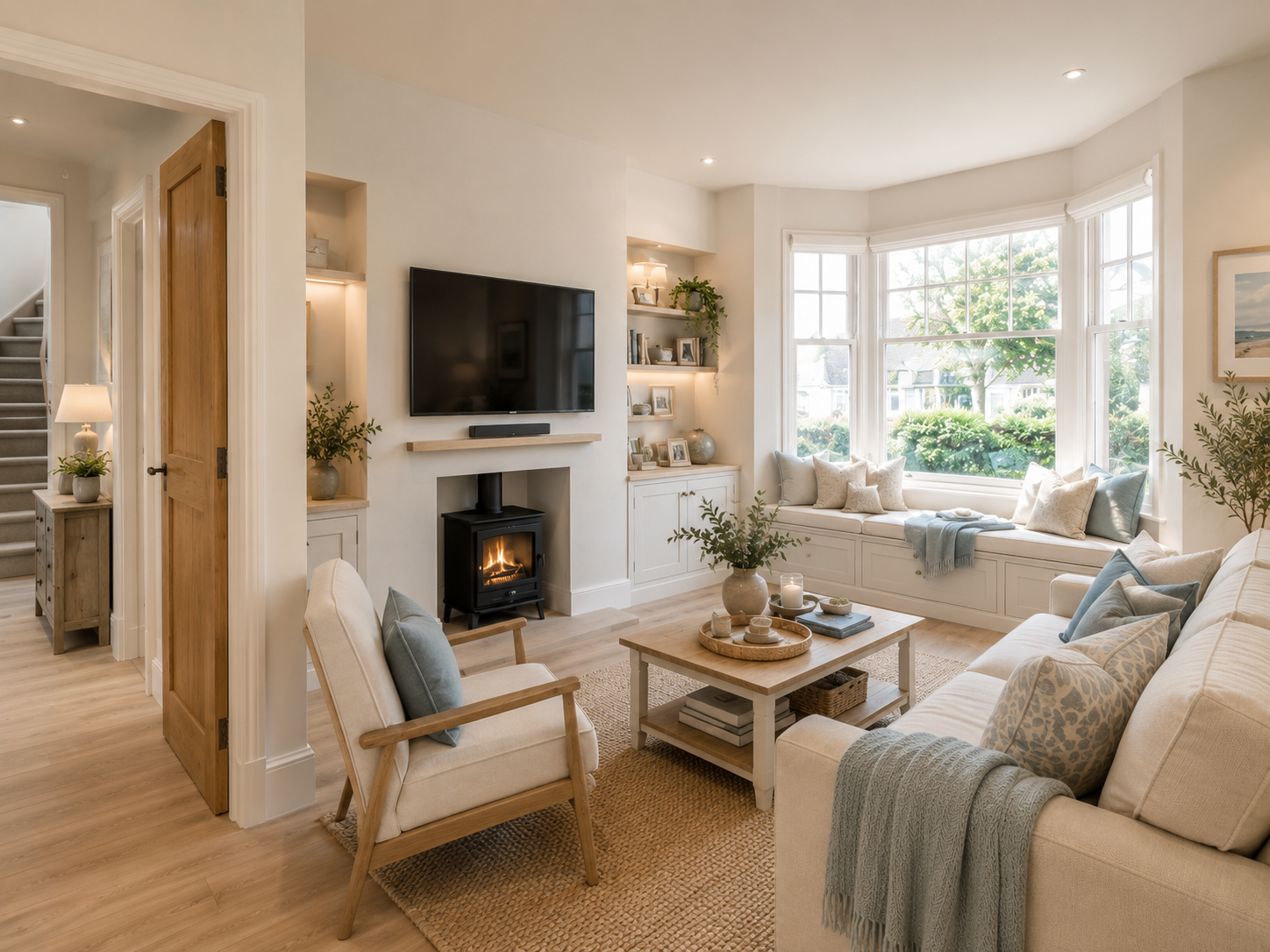
The best homes do not make us choose between style and everyday life.
They give us somewhere to put our belongings. They allow us to move around comfortably. They provide light where we need it and quiet when we need to rest. They contain materials that feel good to touch and improve with age. Most importantly, they reflect the way we genuinely live.
Research into wellbeing and the built environment consistently points towards the importance of comfort, flexibility, control, views, nature and positive sensory experiences. Good design cannot create wellbeing on its own, but it can support it by removing unnecessary frustrations and creating spaces that feel enjoyable to inhabit.
A beautiful home is not one that always looks ready to be photographed. It is one that continues to feel good on a busy Monday morning, when the washing is waiting, breakfast is being made and everybody is trying to leave the house at once.
That is where thoughtful design proves its value.
Research and further reading
The ideas explored in this article are informed by research into the relationship between residential design, indoor environmental quality and psychological wellbeing.
Jagannath, S., Gatersleben, B. and Ratcliffe, E. (2024). Flexibility of the Home and Residents’ Psychological Wellbeing. Journal of Environmental Psychology, 96, 102333. The research found that homes offering choice, adaptability and control were positively associated with residents’ wellbeing.
Riva, A., Rebecchi, A., Capolongo, S. and Gola, M. (2022). Can Homes Affect Well-Being? A Scoping Review among Housing Conditions, Indoor Environmental Quality, and Mental Health Outcomes. International Journal of Environmental Research and Public Health, 19(23), 15975.
Landvreugd, A., Nivard, M. G. and Bartels, M. (2025). The Effect of Light on Wellbeing: A Systematic Review and Meta-analysis. Journal of Happiness Studies, 26(1). The review identified a small-to-moderate positive relationship between light and wellbeing while also highlighting limitations within the existing evidence.
Saxbe, D. E. and Repetti, R. L. (2010). No Place Like Home: Home Tours Correlate with Daily Patterns of Mood and Cortisol. Personality and Social Psychology Bulletin, 36(1), 71–81.
Croffi, J., Kroll, D., Soebarto, V., Barrie, H. and McDougall, K. (2023). Wellbeing Fostered by Design: A Framework for Evaluating Indoor Environment Performance. Buildings & Cities, 4(1), 507–523.