

Charlotte Raywood, founder of ArchNest Design Studio
I didn’t choose to specialise in healthcare architecture because it seemed like a good career opportunity. It came from a very personal experience that completely changed how I thought about buildings and the effect they can have on the people using them.
During my second year at university, my grandmother became seriously unwell and was admitted to hospital. She was placed on an overcrowded ward with eight women in a room that, realistically, should probably have accommodated half that number. There was very little privacy, very little natural light and almost no meaningful view outside. The only window was a small, high-level slit window on the opposite side of the room. In the afternoon, the sunlight would shine directly towards her bed, and because there was no suitable way to control it, she would sometimes have to sit wearing sunglasses.
My grandmother had always been a strong and positive person, but while she was staying on that ward, her mood completely changed. She became distressed, unhappy and withdrawn. At one point, she told us that she wanted to die.
I had never heard her speak like that before.
Of course, she was physically unwell, but it was impossible not to notice how much the environment around her was affecting her emotionally too. The ward felt crowded, clinical and uncomfortable. There was nowhere peaceful to sit, no proper connection with the outside world and very little that helped her feel like herself.
Later, she was moved to a newer ward.
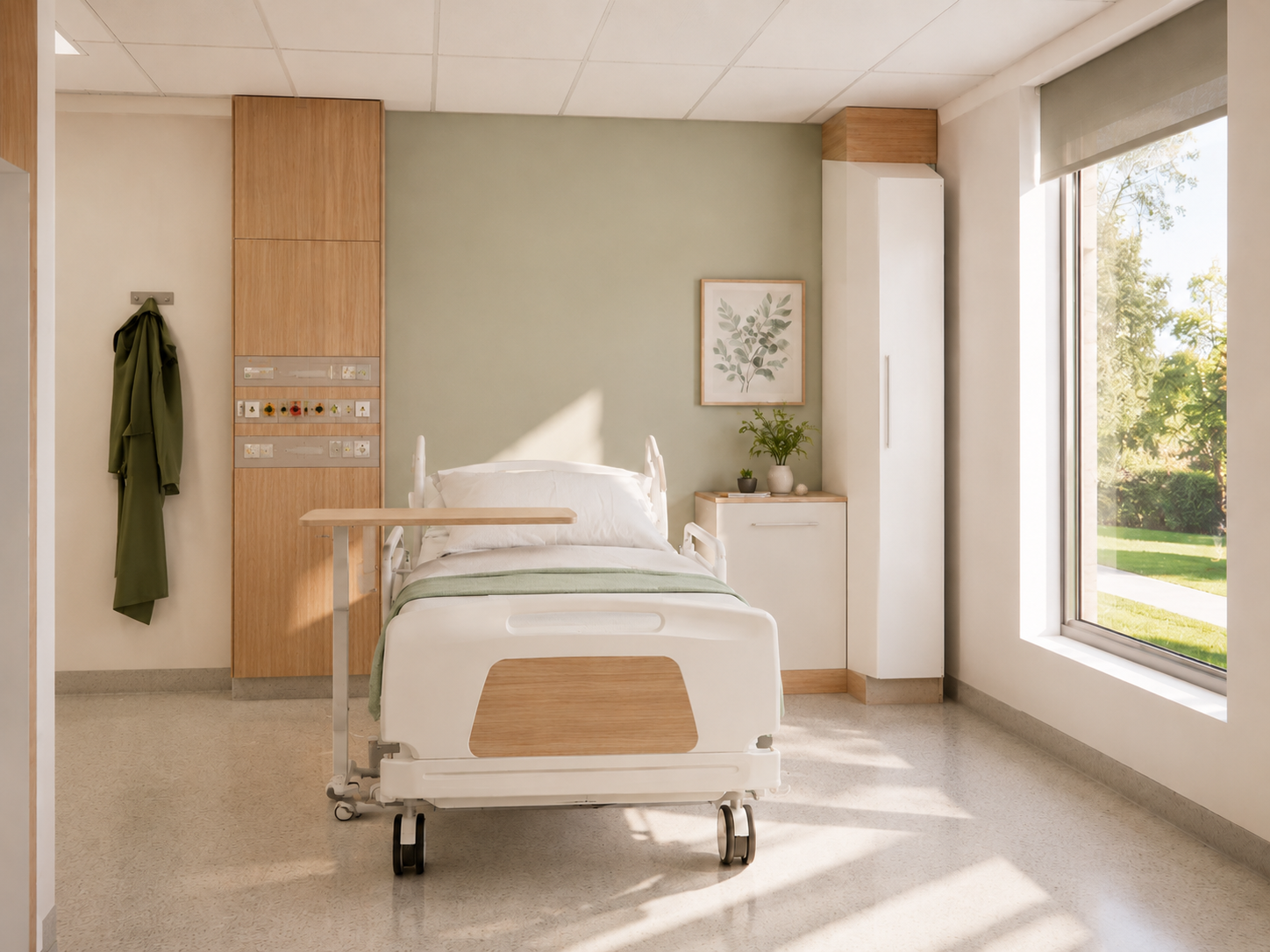
The difference was immediately noticeable.
Instead of sharing with seven other women, she shared the room with three. She had access to an en-suite bathroom, full-height windows and much more natural light. The space felt brighter, calmer and more private. Most importantly, my grandmother changed. She started smiling again. She seemed happier, more comfortable and more positive about her recovery. Although her medical treatment was still incredibly important, the new environment appeared to give her something the previous ward had taken away: hope.
That experience stayed with me.
At the time, I was studying architecture and learning about design, form, materials and construction. But seeing my grandmother in those two very different environments made me understand that architecture is not only about how a building looks or how efficiently it functions.
The spaces around us can influence how we feel.
They can make us feel calm or anxious, connected or isolated, safe or vulnerable. In healthcare settings, where people may already be frightened, unwell or experiencing one of the most difficult periods of their lives, those feelings become even more important.
For my final year at university, I decided to focus my work on healthcare architecture. I began researching the relationship between the built environment, health and wellbeing, and I wrote my dissertation on the healing powers of architecture. I became particularly interested in how elements such as natural light, views of nature, colour, acoustics, privacy and spatial layout could support patients, families and staff.
From that point, I knew healthcare design was the area I wanted to work in.

Over the past thirteen years, I have worked on healthcare projects of many different sizes, from small refurbishments and clinical alterations to large and complex hospital developments.
The projects may vary, but the questions I ask remain very similar.
How will a patient feel when they enter this space?
Is the layout clear and easy to understand?
Does the environment offer privacy and dignity?
Can staff work safely and efficiently?
Is there access to natural light?
Does the space feel calm, reassuring and human?
Healthcare buildings have to meet demanding technical and clinical requirements. Infection prevention, fire safety, accessibility, medical equipment, ventilation, servicing and workflow all have to be carefully coordinated. But meeting the technical requirements should only be the starting point. A healthcare environment can be compliant and functional while still feeling confusing, institutional or intimidating. Good healthcare design needs to consider the human experience alongside the technical detail. It needs to support the people receiving care, the families waiting beside them and the staff working long and often emotionally demanding shifts.
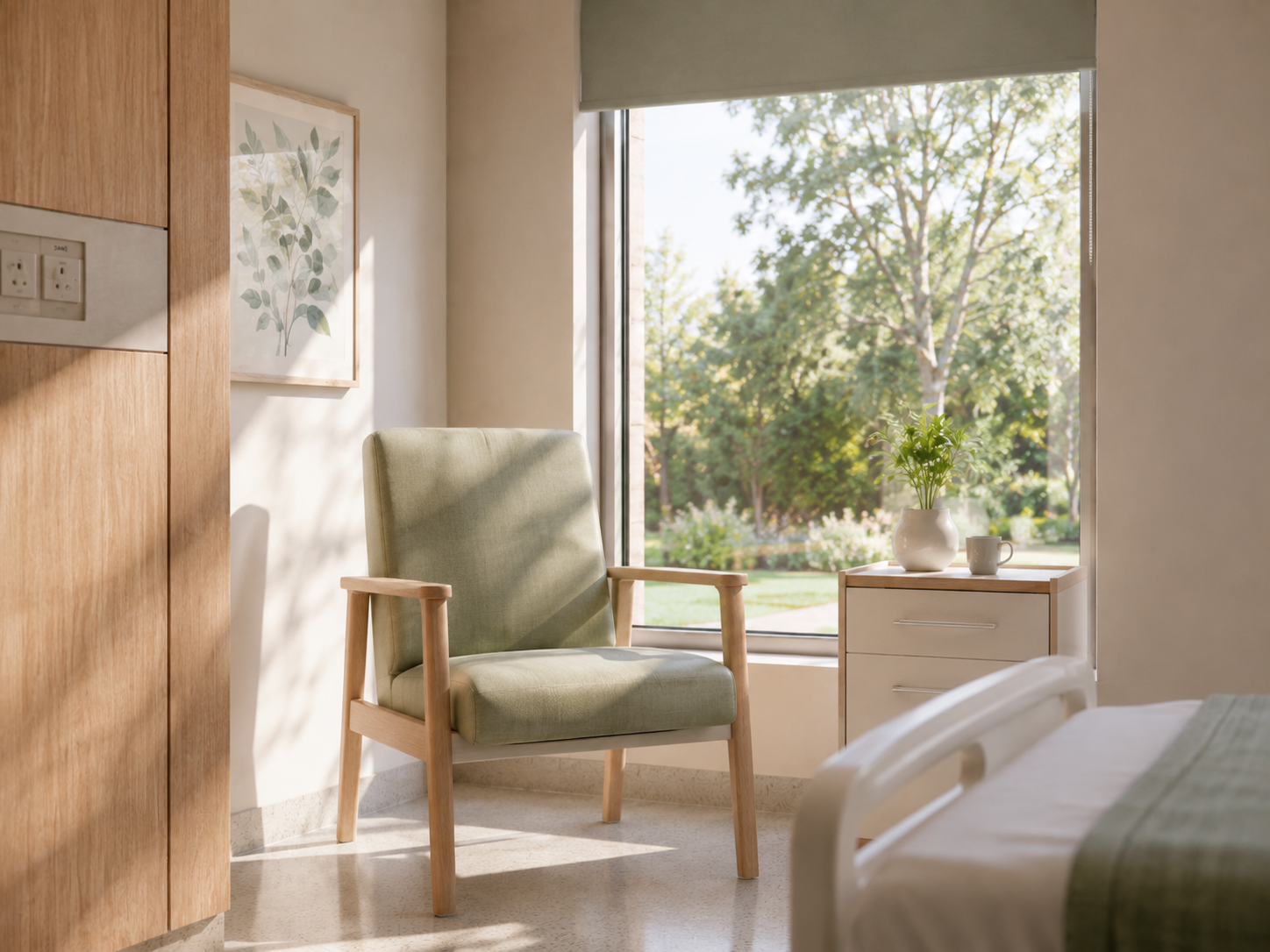
This is one of the reasons I remain so passionate about specialising in healthcare architecture. There is an opportunity within every project, however large or small, to make someone’s experience slightly better.
It might be creating a calmer waiting space for an anxious patient.
It might be improving privacy within a ward.
It might be helping staff move more efficiently through a department.
It might simply be bringing more daylight, warmth or softness into a space that would otherwise feel clinical and uncomfortable.
These decisions may appear small on a drawing, but they can make a meaningful difference to the person using the space.
My grandmother’s experience taught me that buildings are never just backgrounds to our lives. They influence our emotions, our behaviour and, in some circumstances, our sense of hope.
I cannot say that architecture alone can heal someone, because healthcare is far more complex than that. But I do believe that thoughtfully designed environments can support healing, reduce stress and help people feel more comfortable, dignified and cared for. That belief has shaped my entire career and continues to guide the work I do through ArchNest Design Studio today.
For me, healthcare architecture is not simply a specialism.
It is the reason I became the designer I am.